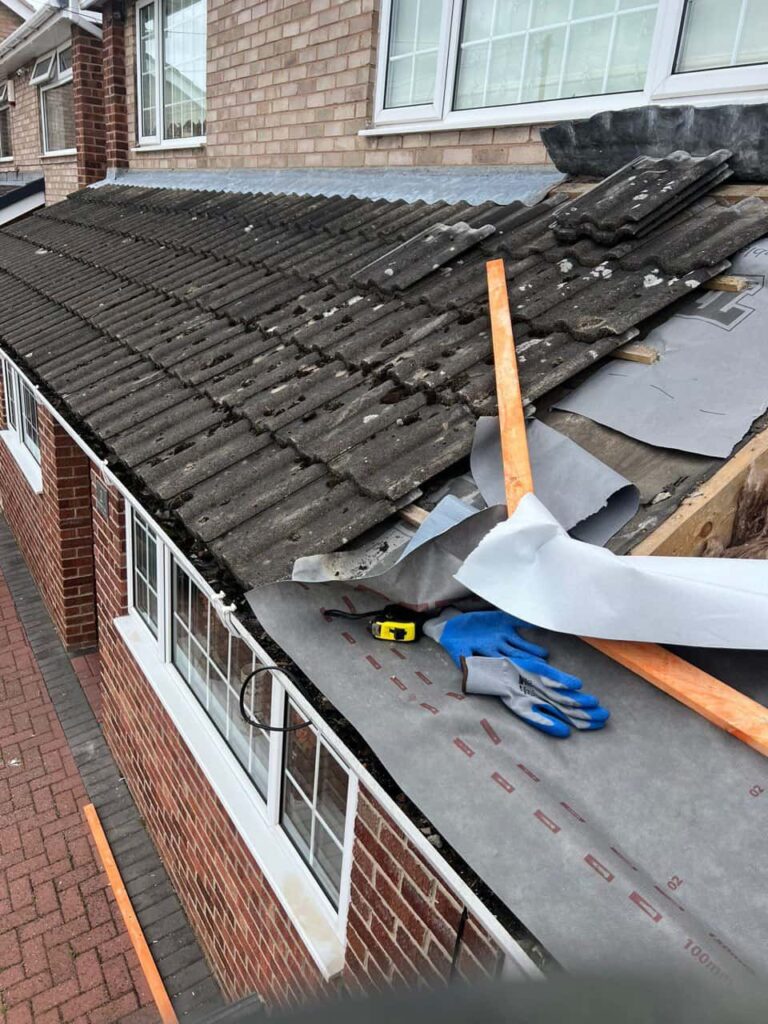
Having a roof repaired should provide confidence that the identified problem has been addressed. However, there are occasions when a leak returns, tiles continue to move, damp reappears or another defect develops shortly after previous roofing work.
When this happens, repeatedly repairing the same visible area is not necessarily the best solution. A recurring problem can indicate that the original cause was not correctly identified, that deterioration extends beyond the repaired section, or that several parts of the roofing system are contributing to the issue.
For homeowners in Burwell, Cambridgeshire, Burwell Roofing Repairs can carry out a thorough assessment to establish why previous roof repairs have not provided the expected result and determine what work is genuinely required.
Why Can a Roof Problem Continue After Repairs?
A roof is made up of numerous components that need to work together. The visible defect is not always the underlying cause.
For example, water appearing beneath one section of the roof does not necessarily mean that this is where it entered. Rainwater can travel along roofing materials and structural components before becoming visible elsewhere.
Similarly, replacing one damaged tile may solve an obvious defect without addressing deterioration in surrounding tiles, fixings, underlay or roof junctions.
When a repair has apparently failed, the first question should therefore be why the original problem is continuing.
Start With a Complete Roof Assessment
If previous repairs have not worked, another quick patch to the same area may simply repeat the problem.
A broader roof inspection can provide much more useful information.
Rather than concentrating only on the previously repaired section, an experienced roofer can consider areas such as:
- Tiles or slates
- Ridge sections
- Valleys
- Lead flashing
- Roof junctions
- Areas around chimneys
- Previous repair work
- Roof edges
- Guttering
- Visible signs of wider deterioration
The purpose is to establish whether there is one unresolved defect or a combination of problems affecting the roof.
The Original Repair May Not Be the Problem
If a roof begins leaking again, it is easy to assume that the previous repair itself has failed.
That is not always the case.
The repaired section may still be performing correctly while water is entering through another nearby weakness. On an ageing roof, several components can deteriorate at approximately the same stage of its life.
One leak may be repaired successfully, only for another vulnerable area to begin allowing water through later.
This is why recurring roofing problems need diagnosis rather than assumptions.
Roof Leaks Can Be Difficult to Trace
Water ingress is one of the clearest examples of why roofing problems sometimes continue despite previous attention.
Water can enter through a defect higher up the roof and travel beneath the covering before finding a route into the property. The damp patch visible indoors can therefore be some distance from the actual entry point.
Potential sources may include damaged roof coverings, deteriorated flashing, defective valleys or weaknesses around roof junctions.
A professional inspection should consider the likely path of the water rather than simply concentrating on the ceiling directly above the damp.
Check Whether the Problem Is More Widespread
A localised repair works best when the surrounding roof remains in satisfactory condition.
If deterioration has spread across a much larger area, repairing one defect at a time may become increasingly ineffective.
Signs of wider roofing deterioration can include:
- Several slipped or damaged tiles
- Repeated leaks in different locations
- Multiple areas of previous repair
- Deteriorating ridge sections
- Problems around several roof junctions
- Widespread weathering of the covering
- New defects appearing regularly
When several of these issues are present, the condition of the entire roof becomes more important than the latest individual defect.
Previous Patch Repairs Can Conceal a Larger Issue
Older roofs can accumulate many small repairs over the years.
One section may have replacement tiles, another may have repaired flashing, while other areas show evidence of patching carried out at different times.
Each repair may originally have addressed a genuine problem. However, when new defects continue developing between those repaired sections, the roof may have reached a stage where isolated work is no longer dealing effectively with its overall condition.
A thorough assessment can establish whether further targeted repairs remain worthwhile or whether a more comprehensive approach is needed.
Pay Particular Attention to Roof Junctions
Some parts of a roof are naturally more complex than open areas of tiles or slates.
Where roof slopes meet walls, chimneys or adjoining roof sections, the details need to prevent water from finding a route beneath the covering.
Flashings and other weatherproofing components around these areas can deteriorate over time.
If previous work has concentrated only on nearby roof tiles without addressing a defective junction, the original problem may continue.
This is why the complete surrounding area needs to be inspected when a leak repeatedly appears in approximately the same location.
Valleys Can Be Responsible for Persistent Leaks
Roof valleys carry significant quantities of rainwater because they sit between adjoining roof slopes.
If a valley or the surrounding roofing materials become damaged or deteriorated, water ingress can occur even when the rest of the roof appears reasonably sound.
Because water can travel after entering, the resulting internal damp may not immediately identify the valley as the source.
Recurring leaks around intersecting roof sections should therefore prompt a careful examination of these important drainage areas.
What If Roof Tiles Keep Slipping?
Replacing an individual slipped tile may be entirely appropriate when the problem is isolated.
If tiles repeatedly move in different parts of the roof, however, it is worth investigating why.
Repeated movement may indicate wider deterioration affecting the roof covering or its supporting components. Continually replacing individual tiles without examining the surrounding area may only provide short-term improvement.
The pattern of failures is often just as important as the individual damaged tile.
Consider What Happens During Bad Weather
Recurring problems sometimes become apparent only during particular weather conditions.
A roof might remain dry during light rainfall but leak during prolonged or wind-driven rain. Tiles may remain in place during calm conditions but move during stronger winds.
These patterns can provide useful clues.
They may indicate that a roofing detail is only failing when exposed to greater volumes of water or particular wind directions. Sharing this information during a roof assessment can help with identifying the source.
Avoid Repeated Temporary Repairs
Temporary roofing work can be valuable when immediate protection is needed, but it should not become a permanent strategy for an underlying defect.
Repeatedly applying short-term solutions can make the roof increasingly complicated without resolving why the problem exists.
If the same issue continues returning, the focus should shift from temporarily stopping the symptom to establishing the cause and carrying out an appropriate lasting repair.
When Is Another Roof Repair Still Appropriate?
Previous repairs not working does not automatically mean the entire roof needs replacing.
A further repair may be suitable when professional inspection identifies a specific unresolved defect and confirms that the surrounding roofing system remains in serviceable condition.
For example, if the problem can be traced to one defined area of flashing, a valley or a limited section of damaged covering, targeted repair work may provide an appropriate solution.
The important factor is that the new repair should be based on a clear diagnosis.
When Should More Extensive Roofing Work Be Considered?
More substantial work may become appropriate when defects are no longer confined to one area.
This can be the case where:
- Leaks occur in several locations
- Roof coverings are deteriorating widely
- Repairs are becoming increasingly frequent
- Numerous previous patches are already present
- Several roofing components show deterioration
- Problems repeatedly move from one section to another
At this stage, continuing with isolated repairs may fail to address the condition of the roof as a complete system.
A professional roofer can determine whether larger-scale repairs or roof replacement would provide a more suitable approach.
Why Roof Replacement Can Sometimes Be the Better Solution
There is an important difference between a roof with one defective component and a roof where widespread deterioration is causing repeated failures.
With the latter, replacement allows the roofing system to be considered comprehensively rather than continuing to repair individual weaknesses as they appear.
Removing the ageing roof covering also provides greater access to assess underlying areas that may not be fully visible during routine repairs.
This does not mean replacement should automatically be recommended whenever one repair has been unsuccessful. It becomes relevant when the overall condition of the roof indicates that recurring problems are likely to continue.
Do Not Ignore a Leak Because It Has Already Been Repaired Once
If water ingress returns, it deserves further investigation.
The fact that a previous repair was completed does not make the new signs of moisture less important. Continuing water penetration can affect areas beneath the external covering and may become increasingly difficult to trace if left unattended.
Arrange another assessment when you notice:
- Damp returning after rainfall
- Water marks becoming larger
- New damp appearing nearby
- Dripping during heavy rain
- Persistent moisture around the same roof area
The sooner the actual source is identified, the easier it is to determine what work is required.
A Good Repair Begins With the Correct Diagnosis
Successful roofing work is not simply about replacing materials.
Finding the cause comes first.
An experienced roofer should consider what has already been repaired, where symptoms are appearing, how the roof behaves during poor weather and whether surrounding components show signs of deterioration.
This provides a much stronger basis for deciding what needs to be done.
Without that investigation, there is a risk of treating the visible symptom while leaving the underlying weakness untouched.
Professional Roof Repairs in Burwell
At Burwell Roofing Repairs, we provide professional roofing services for properties throughout Burwell, Cambridgeshire.
Where previous repairs have not resolved the problem, our approach is to assess the roof carefully and determine why the issue is continuing. This may identify a specific defect requiring further repair, or it may reveal that deterioration extends beyond the area that previously received attention.
The aim is to recommend work based on the actual condition of the roof rather than simply applying another patch to the most obvious symptom.
Conclusion
When previous roof repairs have not worked, the most important next step is a thorough professional assessment. A returning leak or repeated roofing defect does not necessarily mean the previous repair itself has failed; another weakness may exist nearby, water may be entering from a different location, or deterioration may have become more widespread.
Further targeted repairs can still be appropriate when the underlying cause can be clearly identified. However, if problems are developing across multiple sections of the roof, a more comprehensive repair or roof replacement may need to be considered.
For homeowners in Burwell, Cambridgeshire, Burwell Roofing Repairs can investigate recurring roofing problems and identify an appropriate solution. If you have already had work completed but leaks, slipped tiles or other problems continue to return, contact our team to arrange a professional roof assessment.
Call us on: 01638 599 990
Click here to find out more about Burwell Roofing Repairs
Click here to complete our contact form and see how we can help with your roofing needs.